
Plainfield City Directory Collection Runs
Plainfield city directory research begins with the Plainfield Public Library Local History collections, where print, microfilm, newspapers, local census material, obituary resources, maps, and vertical files sit together. The library holds a Plainfield directory run from the 1870s through 1982, with gaps. The earliest listed item is an 1870 Elizabeth directory that includes an eleven-page Plainfield business section. Later volumes focus on Plainfield and North Plainfield. The collection is useful because a name entry, a street section, and a newspaper notice can be checked through the same local-history channel rather than treated as unrelated leads.
| Collection | Years | Where Held | Access |
|---|---|---|---|
| City directories | 1870s through 1982, with gaps | Plainfield Public Library | Print, microfilm, and searchable PDFs |
| Digitized directory run | Verified selected years from 1870 through 1982 | DigiFind-It Plainfield archive | Free year selector and PDFs |
| State census microfilm | 1865, 1885, 1895, 1905, 1915 | Plainfield Public Library | In-library historical household bridge |
| Historical newspapers | Digitized 1837 through 1918; Courier News microfilm 1891 through 1998 | Library and DigiFind-It | Page images, microfilm, and database access |
| Family papers and ephemera | Families 1761 through 1969; ephemera 1830 through 2017, both with gaps | Drake House Museum | Supervised research and reproduction limits |
Do not attach one publisher name to every Plainfield city directory. The inspected library material did not verify a single publisher across the run. Record the title page for the specific volume instead. The digital year list documents the scanned sequence, while the physical shelf can have additional material or different gaps.
Note: A missing directory year is a collection gap, not proof that a family left Plainfield.
Plainfield City Directory Years Online
The Plainfield DigiFind-It archive makes the historical city directories practical for a distant researcher. Its directory search lets a reader choose a category or a particular year, then search the scanned material. The verified list includes early volumes for 1870, 1871, 1872, 1873, and 1879; a long run from 1910 through 1919; selected years across the 1920s through 1970s; and 1982. Use the displayed year list as the authority for an online search. A volume that is absent from that selector may still require a library inquiry rather than an assumption that it never existed.
The archive describes the material as lists of people, businesses, and institutions with locations. Start with a surname in one year, then repeat with initials, a married name, or a street name. Spacing and abbreviation choices matter in historical OCR. Download or note the original page rather than relying on a search snippet, especially when two people share the same surname.
See the digitized directory archive before opening a volume.
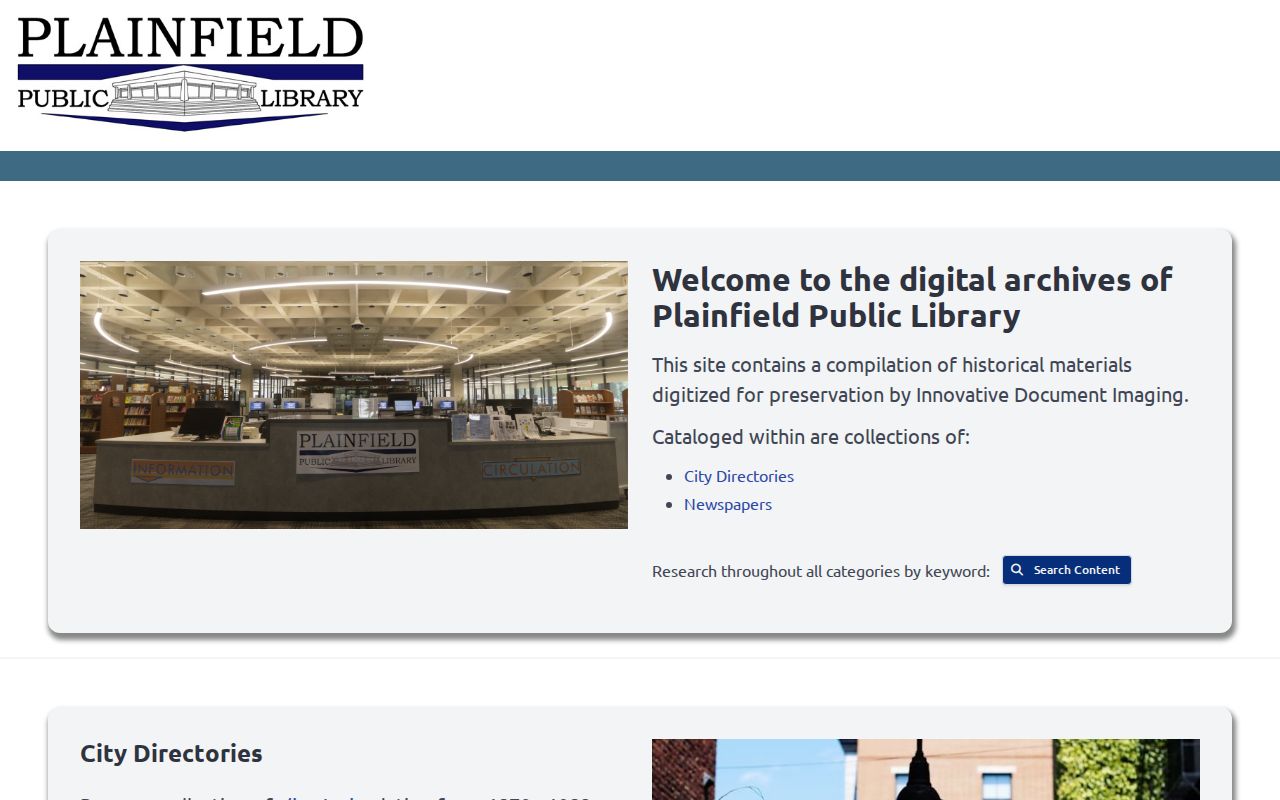
The archive view confirms the point of entry: select the relevant directory year, then work from the scanned page back to the name, address, and street evidence recorded in that edition.
Plainfield Library City Directory Desk
The library at 800 Park Avenue is more than a storage location for a Plainfield city directory. Its Local History, Genealogy & Special Collections holdings include maps, blueprints, photographs, postcards, yearbooks, local club material, surname files, obituary material, police logs, tax ledgers, and local census resources. Local History staff can assist in person and may conduct some remote research by arrangement. A narrow request works best: provide a surname, street, approximate date, and the record type you need checked. The contact listed in the genealogy guide is localhistory@plfdpl.info and 908-757-1111 ext. 136.
Library access also changes what can be seen. The library database list identifies Plainfield as a FamilySearch Affiliate Library, so some restricted FamilySearch images may be viewable on library machines after free registration. It also lists HeritageQuest, Fold3, and historical newspaper databases whose access can depend on a library card or an in-library visit. Ask whether a result is digitized, restricted, or available only on site before making a special trip.
Start with the Local History Collections Index when choosing the next source.
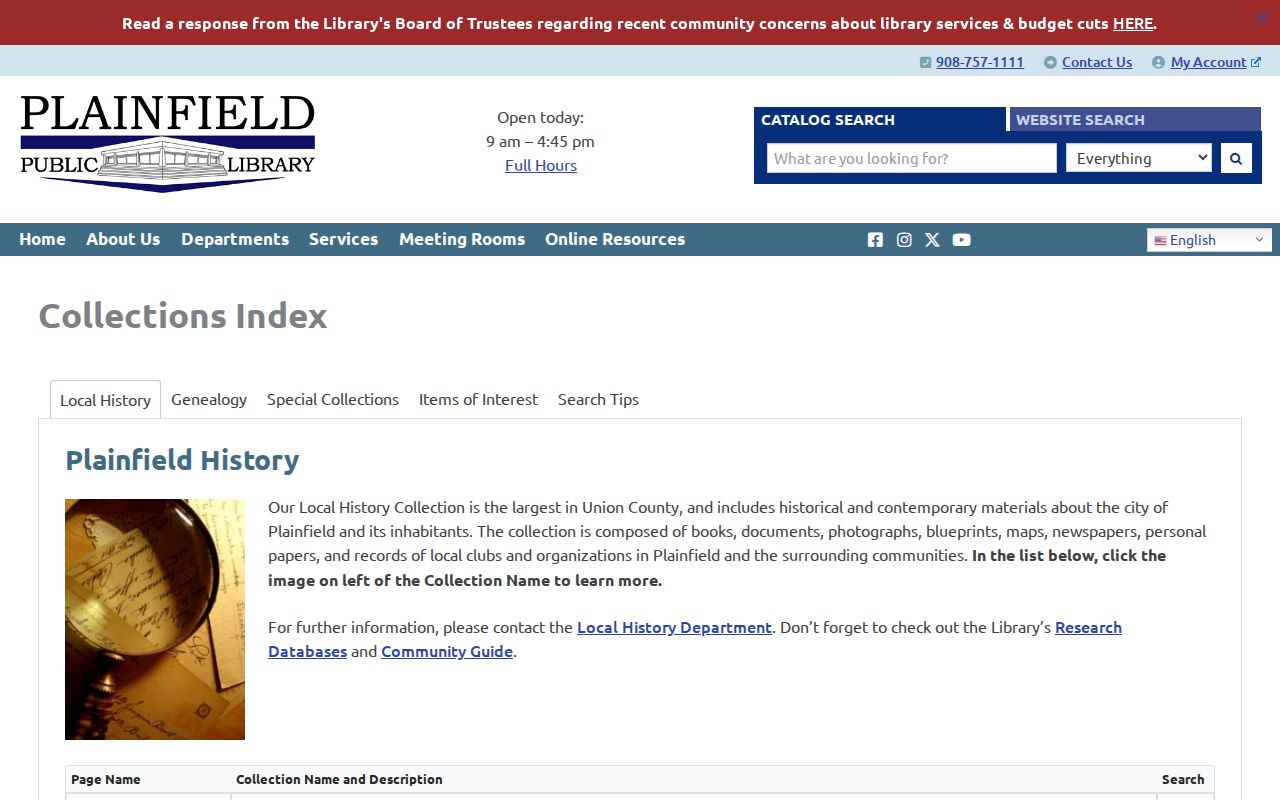
The collection index places directory volumes beside census microfilm, yearbooks, obituaries, and local files that can clarify one difficult entry.
How Plainfield City Directory Entries Read
A Plainfield city directory entry is an annual snapshot, not a modern identity record. The scanned household section can show a surname, given name or initials, a spouse or relative in parentheses, an occupation or employer, and a house number with street. Some volumes use residence, boarding, widow, or ownership-style abbreviations. The mark must be read from that volume's front matter. Never expand an abbreviation from memory, because the key can change between editions. Preserve initials and spelling exactly before trying a normalized search.
| Name or variant | Printed surname, given name, or initials that can separate people with similar names. |
|---|---|
| Relative notation | A spouse or relative may appear in parentheses; widow notation can suggest a later obituary or vital-record check. |
| Work detail | An occupation or employer can distinguish one historic Plainfield resident from another with the same name. |
| Address line | House number and street, sometimes with a residence or boarding-style mark that must be checked against the edition key. |
| Street context | The street section can add cross streets, ranges, endpoints, or an earlier street name. |
| Absence | A missing name can reflect a gap, spelling variation, unlisted household member, or move outside coverage. |
- Street-and-avenue section
- The address-order part of a Plainfield city directory, useful for checking the period street grid and nearby intersections.
- Criss-cross directory
- A street-order arrangement that works from an address toward occupants or business listings when that type of volume is available.
- Abbreviation key
- The explanatory page, usually near the front of a volume, that defines the marks used in that particular directory.
- Negative evidence
- A nonappearance that needs another source before it can support a conclusion about a move or death.
Plainfield City Directories and Former Streets
Street history is one of the strongest reasons to read the original Plainfield city directories. The inspected 1887 volume identifies Essex Street as formerly Division Avenue and gives its historic span from John Street southwest to Darrow Avenue. The 1891 Street and Avenue Directory adds beginning and end points, intersections, and sometimes side-of-street ranges. A search that uses only a current street name can therefore miss a family, a business, or an address reference printed under the earlier name.
Record the street label exactly as it appears, then compare it with the current parcel identity. A historic entry can also fall outside today's municipal expectation. The 1977 directory introduction describes a trade area reaching into Fanwood, Scotch Plains, Green Brook, Warren, Watchung, and North Plainfield. That commercial geography does not redraw Plainfield's legal boundary. It does explain why a directory or newspaper address may need an added municipality check.
For building context, the 1892 Plainfield and North Plainfield Sanborn map set has 21 sheets that can be compared with a street section and present parcel geography.
Trace Plainfield City Directories Across a Household
Follow an address as well as a name. A spouse may be indexed differently, a widow may appear under a later surname, and a person can move while remaining in Plainfield. Each result should keep its year, page, spelling, street form, and the evidence type. Federal census records describe a household on enumeration day, while the directory gives an annual address and occupation snapshot. The library's state-census microfilm fills useful intervals between federal releases.
- Search a surname and given-name variants in one Plainfield city directory year. Save the exact address, relative notation, occupation, and any printed residence marker.
- Search that address in the next available directory, not only the same name. Check the street section if the number or street label looks unfamiliar.
- Try the documented Essex and Division street names when the address falls on that corridor or an old clipping uses a different label.
- Pair directory evidence with released federal census years from 1850 through 1950, observing the federal 72-year release rule.
- Use the 1865, 1885, 1895, 1905, and 1915 New Jersey state-census microfilm to bridge years where it fits the household timeline.
- Check newspaper and obituary material, cemetery evidence, or probate separately before treating a death annotation as final proof.
A departure can mean a move, a death, an omitted household member, a spelling difference, or a coverage boundary. The 1930 volume's many death annotations can point to an obituary search, but they are not a death certificate. Keep the directory page and the confirming record as separate evidence.
Note: Census composition and a directory address should be compared by date, not treated as simultaneous proof.
Plainfield Voices Beyond City Directories
Some former residents leave a stronger memory trail than a street listing. The library's local-history collections identify Black-history material and oral histories of African-American, Latino, and Hispanic communities, including the Plainfield Voices interviews about the 1967 Plainfield Uprising. StoryCorps and Union County interviews add community accounts from local residents representing many countries. These are not current-address sources. They can, however, help a family researcher understand why a surname appears with a language variant, why a household moved, or why a neighborhood is remembered differently than it is labeled in a directory.
Use those memories with the same care given to a city directory: record the interviewer, collection, date, and exact description. A personal recollection can guide a search toward a school, congregation, newspaper, or family file. It should not be silently substituted for a documented address or legal relationship.
Plainfield City Directory Gaps at Drake House
When the directory trail goes quiet, the Drake House Museum collections offer a different kind of evidence. The Historical Society of Plainfield holds the Plainfield Families Collection, dating from 1761 to 1969 with gaps, and an ephemera collection dating from 1830 to 2017 with gaps. Family papers can include correspondence, certificates, photographs, clippings, school material, and financial records. Ephemera includes funeral cards, calling cards, programs, advertisements, postcards, and other materials that may preserve a name or location absent from a city directory.
Open research access does not mean unrestricted copying. Contact the museum before visiting, follow its copyright and reproduction rules, and ask whether a family name, street, date range, or collection series is open for consultation. The museum is at 602 West Front Street, and the research material lists Sundays from 2 to 4 p.m. for public hours, with private tours dependent on guide availability and a suggested nonmember donation of $5.
Visit the Drake House collections page before requesting an archival search.
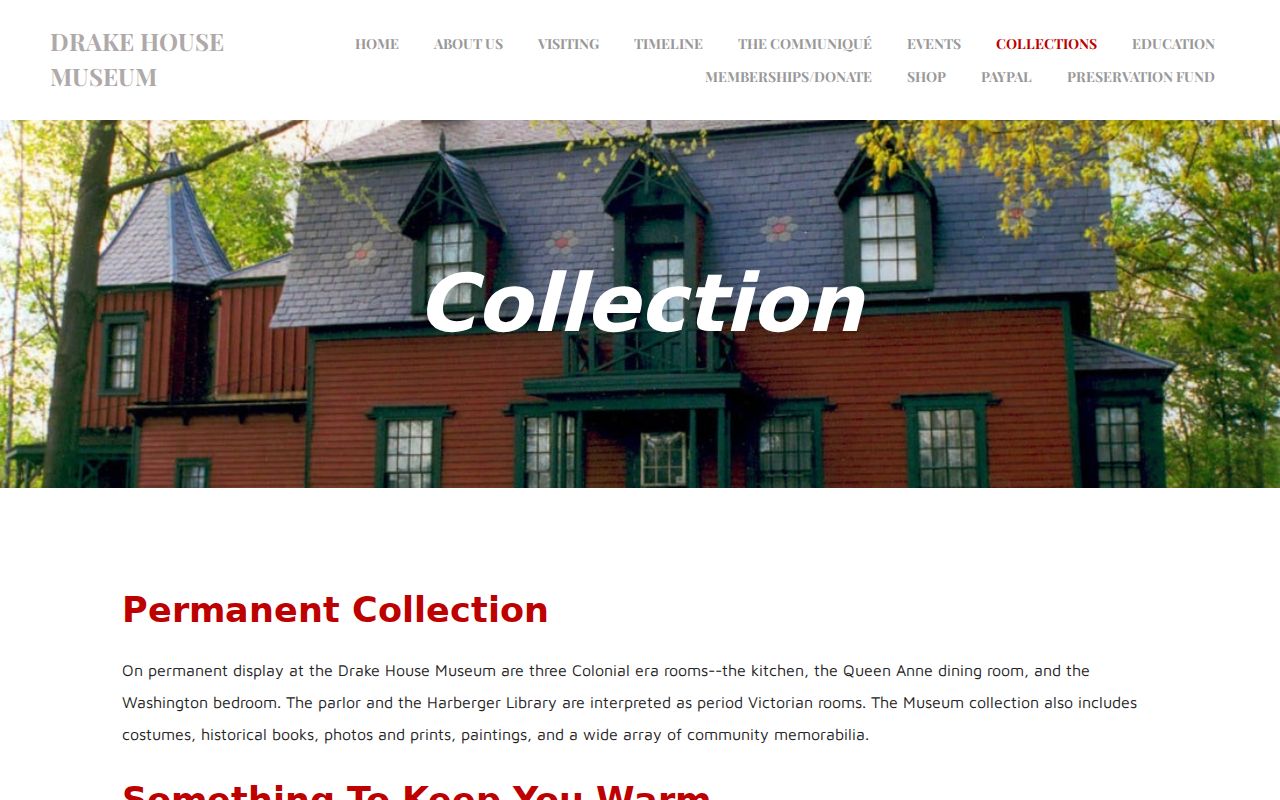
The Drake House material is a useful companion when a directory name needs a family-paper, funeral-card, school, or neighborhood context.
Plainfield City Directory Record Timeline
Plainfield's record sequence reflects the city's growth from an earlier settlement landscape to a dense street city. Union County was created in 1857, city government was established in 1869, and the library's directory shelf begins with an 1870 Plainfield business section. The railroad had arrived in 1837 and the city grew rapidly from 1870 through 1930. Those changes help explain why an older search can depend on land descriptions while later research benefits from street, household, and business listings.
| 1837 | Rail service reaches Plainfield, an early shift in the city's transport and settlement pattern. |
|---|---|
| 1857 | Union County begins, creating the county-level deed and naturalization context used beside local directories. |
| 1870 | An Elizabeth directory includes an eleven-page Plainfield business section, the earliest item listed in the library run. |
| 1877 | Plainfield is incorporated as a city, during the period when dedicated directory coverage becomes more useful. |
| 1982 | The final directory volume in the documented library run is about 700 pages dedicated to Plainfield and North Plainfield. |
The city directory is only one layer. Use a date, custodian, and identifier with each result: a directory page for an address, a census schedule for a household, a parcel block and lot for land, and a recorded instrument for ownership.